

Search has changed quickly over the past two years. Traditional search engines still matter. However, AI platforms now answer questions directly inside their interfaces.
That shift has introduced a new term: Generative Engine Optimization, or GEO.
Many people are asking the same questions. Is GEO replacing SEO? Do we need a new strategy? Or is this just another trend?
Here’s the clear answer: GEO doesn’t replace SEO. It builds on the same foundations.
In this guide, we’ll break down what SEO and GEO really mean, how they differ, and what you should focus on now.
TL;DR: GEO vs SEO– SEO helps you rank in search engines like Google.– Generative Engine Optimization (GEO) helps you get cited and surfaced in AI tools like ChatGPT, Gemini, and Perplexity. – GEO is not replacing SEO. It’s changing how visibility works. – You need structured content, authority signals, and strong links to win in both. – Brands that adapt now will own both search traffic and AI-driven discovery. |
What Is SEO?
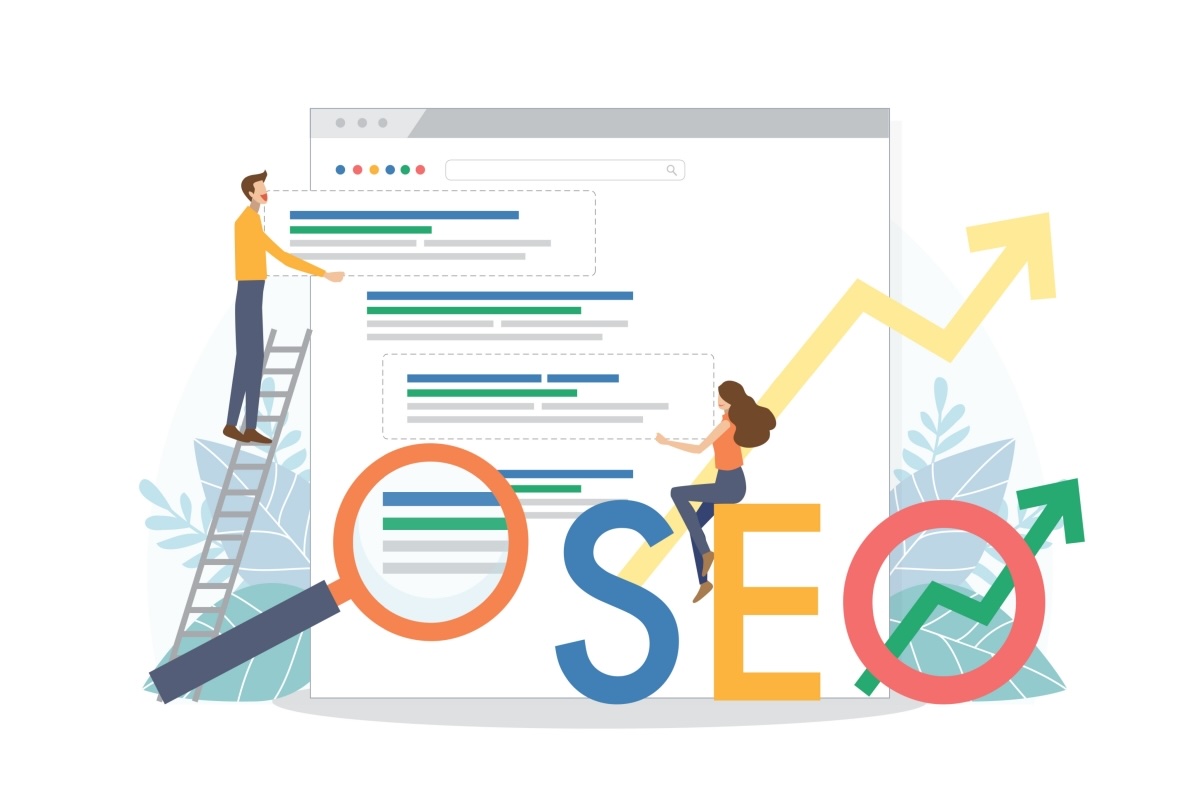
Search Engine Optimization (SEO) is the practice of improving a website so it ranks higher in search engine results pages.
When someone searches in Google or Bing, search engine crawlers scan and index web pages. Search algorithms then evaluate those pages based on relevance, authority, site structure, performance signals, and user intent to determine traditional search rankings and keyword rankings.
Core SEO Pillars
SEO isn’t one tactic. It combines several disciplines that work together:
- Keyword research aligned with search intent
- On-page optimization, including headings and metadata
- Technical SEO, such as crawlability, site speed, mobile usability, and Core Web Vitals performance
- Backlink acquisition to build authority
- Deep, useful content that satisfies user queries
Effective keyword optimization goes beyond inserting phrases into headings. It requires understanding user intent – whether someone is researching, comparing options, or ready to buy. Search engines reward content that matches that intent clearly and completely.
Goal of SEO
The primary goal of SEO is to drive qualified organic traffic. When done correctly, SEO delivers:
- Consistent inbound leads
- Lower customer acquisition costs
- Compounding traffic growth over time
- Greater brand credibility
What Is Generative Engine Optimization (GEO)?
Generative Engine Optimization (GEO) focuses on increasing your visibility inside AI-generated answers.
Most modern AI platforms are powered by large language models (LLMs) trained on vast datasets of web content. Instead of ranking indexed pages like traditional search engines, these systems generate responses by identifying patterns, context, and relationships between topics. In some cases, AI crawlers also retrieve up-to-date content to enhance answers.
Those AI-generated responses now appear in two environments:
- Standalone AI engines like ChatGPT, Google Gemini, and Perplexity
- Search engine results pages through AI Overviews and generative summaries
Instead of ranking in a list of blue links, your content is:
- Cited
- Referenced
- Summarized
- Or used as a source
With SEO, you compete for rankings. With GEO, you compete for inclusion in AI-generated answers.
That shift affects how users interact with information. SparkToro’s research shows that almost 60% of Google searches result in zero clicks. AI summaries like Google’s AI Overviews are reinforcing that behavior.
If your brand isn’t cited in AI answers, you may lose visibility even if you rank well thanks to your SEO efforts. You can check how your brand is performing in AI search by using AI visibility tools.
What GEO Optimizes For
GEO relies on signals that overlap with SEO, but the emphasis shifts slightly:
- Clear definitions and structured formatting
- Strong domain authority
- Topical depth and consistency
- Brand mentions across trusted sources
AI systems prioritize authoritative, well-structured content. Thin blog posts rarely get referenced.
Why Is GEO Important?
Search behavior has changed in a measurable way. People no longer rely only on traditional search results. They now use AI tools to ask complex, conversational questions.
Instead of typing short phrases like “link building services,” users now ask:
- “What’s the difference between white-label and in-house content?”
- “Which SEO strategy works best for SaaS companies?”
- “How do I scale blog production without hiring writers?”
AI platforms respond with summarized answers. In many cases, users don’t leave the interface.
In the past, a user might:
- Search for a topic
- Open several blog posts
- Compare solutions
- Visit company websites
Now, much of that comparison happens inside AI responses.
For businesses and agencies, this creates a shift in visibility. And this shift has also changed how content gets selected.
AI models are built around natural language. Users ask full questions, not fragmented keywords, and expect direct answers. As a result, AI systems don’t rely on simple keyword matching. They interpret meaning, context, and relationships between topics.
This is where GEO connects directly to content structure.
Content that performs well in AI-driven environments usually:
- Answers questions clearly and early
- Uses descriptive headings
- Follows a logical structure
- Defines terms in plain language
- Demonstrates authority through credible signals
SEO fundamentals still matter. However, clarity and topical depth matter even more when systems interpret intent rather than just scanning for phrases.
For businesses selling services, this has real implications. If your brand isn’t clearly associated with a topic, AI tools may summarize competitors instead. That’s why strong content, consistent topical coverage, and authoritative links now play a larger role in overall visibility.
See our post on the best content formats for GEO and AEO for more on what performs best in search now.

GEO vs SEO: Key Differences
Although SEO and GEO share foundations, they operate in different environments. Here’s a side-by-side comparison:
| Factor | SEO | GEO |
| Primary Platform | Search engines like Google and Bing | AI platforms and generative interfaces |
| Output | Ranked web pages | Synthesized AI-generated answers |
| User Action | Click through to websites | Often zero-click consumption |
| Optimization Focus | Keywords, links, technical health | Authority, clarity, entity recognition |
| Measurement | Rankings, traffic, conversions | Mentions, AI citations, brand visibility |
The difference isn’t about abandoning SEO. It’s about adapting to how discovery now happens. Rankings still matter. But brand authority and structured content now influence AI inclusion as well.
What Actually Matters for GEO?
There’s plenty of noise around GEO. Some claim it requires a completely new playbook. In reality, most fundamentals remain the same.
From what we see across client campaigns, the following factors carry real weight.
1. Authority Still Wins
To generate answers, AI systems rely on patterns learned from large volumes of web content. That content includes signals of credibility and authority.
In traditional search, authority has long influenced rankings. Google’s Search Quality Rater Guidelines highlight Experience, Expertise, Authoritativeness, and Trust (E-E-A-T) as core evaluation principles.
Although quality raters don’t directly control rankings, Google uses these frameworks to train and refine its systems.
The same underlying signals shape what content gets surfaced in AI-driven environments.
Strong authority signals typically include:
- High-quality backlinks from relevant, trusted domains
- Consistent mentions in reputable publications
- Deep, ongoing coverage of a defined topic
- Clear brand association with specific subject areas
These signals help systems understand which brands are credible sources within a category.
For example, if your website consistently earns links from respected industry sites and publishes comprehensive content around SaaS SEO, both search engines and AI systems begin associating your brand with that topic.
Without those signals, inclusion becomes less likely.
That’s why link building and good content still matter. It’s not just about ranking higher. It’s about reinforcing credibility across the web.
2. Clear, Structured Content
AI systems extract information more effectively from structured content. That typically includes:
- Clear H2 and H3 headings
- Concise definitions
- Short paragraphs
- Logical topic flow
- FAQ-style sections
Long, unfocused articles often underperform. Clarity improves both human readability and machine interpretation.
3. Topical Depth
One 800-word article does not establish authority. Businesses that win in both SEO and GEO usually build:
- Pillar content covering broad themes
- Supporting cluster articles
- Internal links connecting related topics
This approach strengthens topical ownership. It also increases the chances that AI systems associate your brand with specific subject areas.

4. Brand Mentions Across the Web
Brand mentions now carry additional weight in AI-driven environments.
Generative systems don’t only evaluate links. They evaluate patterns across large datasets. When your brand consistently appears alongside certain topics, it strengthens entity recognition.
For example, if your company is consistently mentioned in conversations about eCommerce SEO, franchise marketing, or B2B content strategy, AI systems begin associating your brand with those areas.
This can include:
- Editorial mentions in industry publications
- Expert quotes in roundup articles
- Podcast appearances
- News features and digital PR placements
- Comparison pages referencing your brand
Search engines organize information around entities. An entity can be a person, company, product, service, or concept. Instead of viewing pages as isolated blocks of text, Google connects related signals across the web to understand how those entities relate to one another.
Structured data, consistent topic coverage, and repeated brand mentions all help strengthen those connections. In its Search documentation, Google explains that structured data gives its systems clearer context about what a page represents and how it fits into a broader knowledge graph.
When your brand is consistently associated with specific topics, search engines build a clearer understanding of your expertise. AI systems rely on similar pattern recognition. They evaluate how often your brand appears in connection with certain subjects and how authoritative those sources are.
That’s why repeated, relevant mentions matter. They reinforce your position within a defined category and increase the likelihood of being surfaced in both search results and AI-generated answers.
How To Update Your Content Strategy for GEO & SEO
Adapting to GEO doesn’t mean rebuilding your entire strategy. It means tightening what already works and making it easier for both search engines and AI systems to understand your authority.
For agencies and businesses, the focus should be on structure, consistency, and authority signals. If your content already ranks, the goal is to make it more reference-worthy and better connected.
Here’s how to approach it.
1. Build Topic Clusters, Not Isolated Posts
Publishing random blog posts around trending keywords is less effective today. Search engines and AI systems both reward topical depth. When you cover a subject comprehensively, you signal expertise.
A topic cluster model typically includes:
- A pillar page covering a broad theme
- Supporting articles addressing subtopics
- Strategic internal links connecting them
For example, a business offering link-building services might create:
- A pillar page on link-building strategy
- Supporting content on guest posting, niche edits, and digital PR
- Articles answering common client questions
This site structure helps search engines understand subject relationships. It also increases the chance that AI tools pull information from multiple pieces within your content ecosystem.
2. Invest in High-Quality Link Building
Authority determines inclusion. Backlinks remain one of the strongest ranking signals. While AI platforms don’t publish ranking factors, they rely on web authority signals in their training data.
Strong link profiles help:
- Improve organic rankings
- Strengthen domain credibility
- Increase the likelihood of brand recognition
- Support GEO search visibility
Not all links are equal. Low-quality links can dilute trust.
At Contentellect, our link-building services focus specifically on building high-quality guest posts and niche edits on real websites with genuine traffic. For agencies and businesses scaling client campaigns, that reliability matters. It strengthens authority without adding operational strain.

3. Write for Clarity Over Keyword Density
Keyword targeting still matters. However, density and exact-match repetition matter less than clarity.
AI systems extract meaning from structured information. Clear writing increases the chances of inclusion.
To improve clarity:
- Define important terms early
- Use descriptive H2 and H3 headings
- Keep paragraphs concise
- Answer questions directly
- Avoid filler or vague statements
For example, instead of writing a long abstract introduction, clearly state what the reader will learn and why it matters.
FAQ sections can also help. They mirror how users phrase conversational queries inside AI tools.
When we create content for partners, we focus on structure first. Rankings follow more consistently when clarity and depth are prioritized.
4. Strengthen Brand Authority
Publishing content on your own site isn’t enough anymore. AI systems learn from broad web signals. If your brand only exists on your domain, recognition stays limited.
To improve both SEO and GEO visibility, businesses should expand authority across trusted platforms.
Effective approaches include:
- Contributing expert insights to industry publications
- Securing placements through digital PR
- Publishing guest posts on relevant sites
- Participating in podcasts or webinars
- Earning media coverage from credible outlets
These efforts create consistent brand associations. Over time, that strengthens how search engines and AI systems interpret your expertise.
5. Refresh and Upgrade Existing Content
Creating new content is important. Updating existing content is often faster and more efficient. And search engines reward freshness when it improves quality.
For GEO, updated content increases the likelihood that AI tools pull current, accurate information.
A structured content refresh process might include:
- Expanding thin sections
- Updating outdated statistics
- Improving internal linking
- Clarifying definitions
- Adding FAQ sections aligned with conversational queries
For agencies managing multiple clients, this is a practical way to increase impact without multiplying production volume. We often see stronger performance from refreshed, authority-driven pages than from brand-new posts targeting low-competition terms.

6. Monitor Brand Presence Across Search and AI
Measurement is evolving. Rankings and traffic still matter. But brand visibility now extends beyond clicks.
Businesses should begin monitoring:
- Branded search volume trends
- Mentions across industry publications
- Inclusion in AI-generated answers
- Referral traffic from AI tools where trackable
While AI visibility tracking is still developing, manual testing inside platforms like ChatGPT, Gemini, and Perplexity can reveal patterns. If competitors consistently appear in answers related to your niche, but your brand does not, that signals an authority gap. Closing that gap usually requires stronger content depth and higher-quality links.
By combining structured content, authoritative placements, and ongoing optimization, businesses can remain visible across both traditional search engines and emerging generative platforms.
The Risk Of Ignoring GEO
Some businesses assume GEO is temporary. Others believe strong rankings alone will protect them.
That assumption is risky and here’s why:
Reduced Click-Through Rates
Even if you rank well, AI-generated summaries can reduce clicks. For example:
- A user asks for a comparison.
- AI summarizes the differences.
- The user makes a decision without visiting any site.
If your brand isn’t referenced in that summary, you remain invisible. Over time, this can affect lead volume, branded search growth, and market positioning.
Competitors Owning The Narrative
When AI tools repeatedly cite certain brands, those brands become default authorities. That creates a compounding effect. More mentions lead to stronger entity recognition. Stronger recognition increases the likelihood of future citations.
Businesses that ignore GEO may find competitors shaping conversations in their space.
Addressing this requires deliberate authority building, not reactive content publishing.

Will GEO Replace SEO?
No.
SEO continues to drive measurable traffic and conversions. Businesses still need strong rankings for commercial keywords.
However, visibility now extends beyond search results pages.
SEO drives clicks. GEO influences presence inside AI-generated answers. The two disciplines overlap heavily:
- Both reward authoritative domains
- Both favor structured, helpful content
- Both rely on strong brand signals
The difference is in where users consume information.
Businesses that optimize only for rankings may miss opportunities in AI-driven discovery. Businesses that ignore SEO fundamentals will struggle to build authority in the first place.
The practical approach is integration. Invest in content depth, internal structure, and authoritative links. Those signals strengthen both search performance and AI visibility.
A Practical Checklist For GEO Success
GEO can feel abstract. Turning it into actions makes it manageable. Here’s a practical checklist to align your strategy with both SEO and generative platforms:
- Create comprehensive pillar pages around core service themes
- Connect related articles through strategic internal links
- Define key terms clearly within your content
- Add FAQ sections that mirror conversational queries
- Earn high-quality backlinks from relevant sites
- Pursue digital PR and authoritative brand mentions
- Refresh outdated content with updated data and examples
- Review AI platform responses to assess brand inclusion
This doesn’t require doubling your workload. It requires sharpening your focus.
At Contentellect, we support agencies and businesses that need scalable content and link building without expanding internal teams. We focus specifically on blog content and authoritative backlinks to strengthen the signals that drive visibility across both search engines and AI platforms.
When authority, structure, and consistency align, visibility compounds across channels.

Conclusion: SEO + GEO = Future-Proof Visibility
Search is expanding, not disappearing. Traditional SEO still drives traffic, leads, and revenue. At the same time, AI platforms are shaping how people discover and evaluate brands.
GEO doesn’t replace SEO. It builds on the same foundations: authority, clarity, and depth.
Businesses that win in this environment typically:
- Publish structured, comprehensive content
- Build strong backlink profiles
- Strengthen brand recognition across trusted websites
- Maintain consistent topical coverage
The tactics aren’t radically new. The environment is.
If your brand earns authority across the web, both search engines and AI systems are more likely to surface it. If authority is weak, visibility shrinks across both channels.
That’s the real shift.
Scaling high-quality content and authoritative links takes time and operational focus. Many agencies and growing businesses don’t have the internal bandwidth to execute consistently. That’s where we come in.
At Contentellect, we act as a reliable extension of your team. If you’re looking to strengthen authority, improve rankings, and increase visibility in AI-driven search environments, let’s talk.
We’ll help you build a system that supports both SEO and GEO strategies without overwhelming your internal team.
FAQs
What Is the Difference Between SEO and GEO?
SEO aims to improve rankings in traditional search engine results pages. The goal is to earn clicks from users searching in Google or Bing.
GEO focuses on increasing visibility inside AI-generated answers. Instead of competing only for rankings, your content competes to be cited, summarized, or referenced in AI responses.
SEO drives traffic. GEO influences inclusion in AI summaries. Both rely on authority, structure, and strong content foundations.
How To Write for GEO vs SEO?
The core principles overlap, but emphasis differs.
For SEO, writing often prioritizes:
- Search intent alignment
- Target keyword integration
- Internal linking
- Optimized metadata
For GEO, writing should emphasize:
- Clear definitions
- Direct answers to common questions
- Logical structure with descriptive headings
- Topical depth across related articles
In practice, well-structured, authoritative content performs best for both SEO and GEO.
Is GEO Better Than SEO?
Neither is better. They serve different discovery environments.
SEO is essential for capturing search-driven traffic. GEO improves visibility inside AI-generated answers and summaries. If a business ignores SEO, it limits traffic growth. If it ignores GEO, it risks losing visibility in AI-driven research journeys.
What Is The Difference Between SEO and SGE?
SGE stands for Search Generative Experience, a term introduced by Google for AI-generated summaries within search results. More recently, Google refers to these as AI Overviews.
SEO targets traditional ranking positions in search results. SGE or AI Overviews appear above or alongside organic listings and summarize information directly on the results page.
Optimizing for SGE requires strong authority, clear structure, and concise answers. Those signals overlap heavily with GEO.
What Is The Difference Between GEO and AEO?
AEO stands for Answer Engine Optimization. It focuses on optimizing content to appear in featured snippets, voice search results, and direct question-answer formats.
GEO is broader. It applies to generative AI systems that synthesize responses from multiple sources.
AEO often targets structured snippets within search engines. GEO targets AI-generated responses across platforms. Both prioritize clarity, authority, and question-based formatting. The difference between AEO vs GEO lies in what technology delivers the answer.
