

Organic visibility is changing, and AI Overviews are leading that shift by changing how users engage with search results and how much valuable traffic reaches each site.
Instead of showing a list of blue links, Google now uses AI-generated summaries that combine valuable insights from multiple sources. These AI Overviews give users instant answers, and often replace the need to click through to a site, scroll through pages, or run multiple searches.
This change redefines how visibility and authority are earned.
So, understanding how AI Overviews work has become essential for any modern content strategy aiming to stay competitive.
What Are AI Overviews in Google Search?
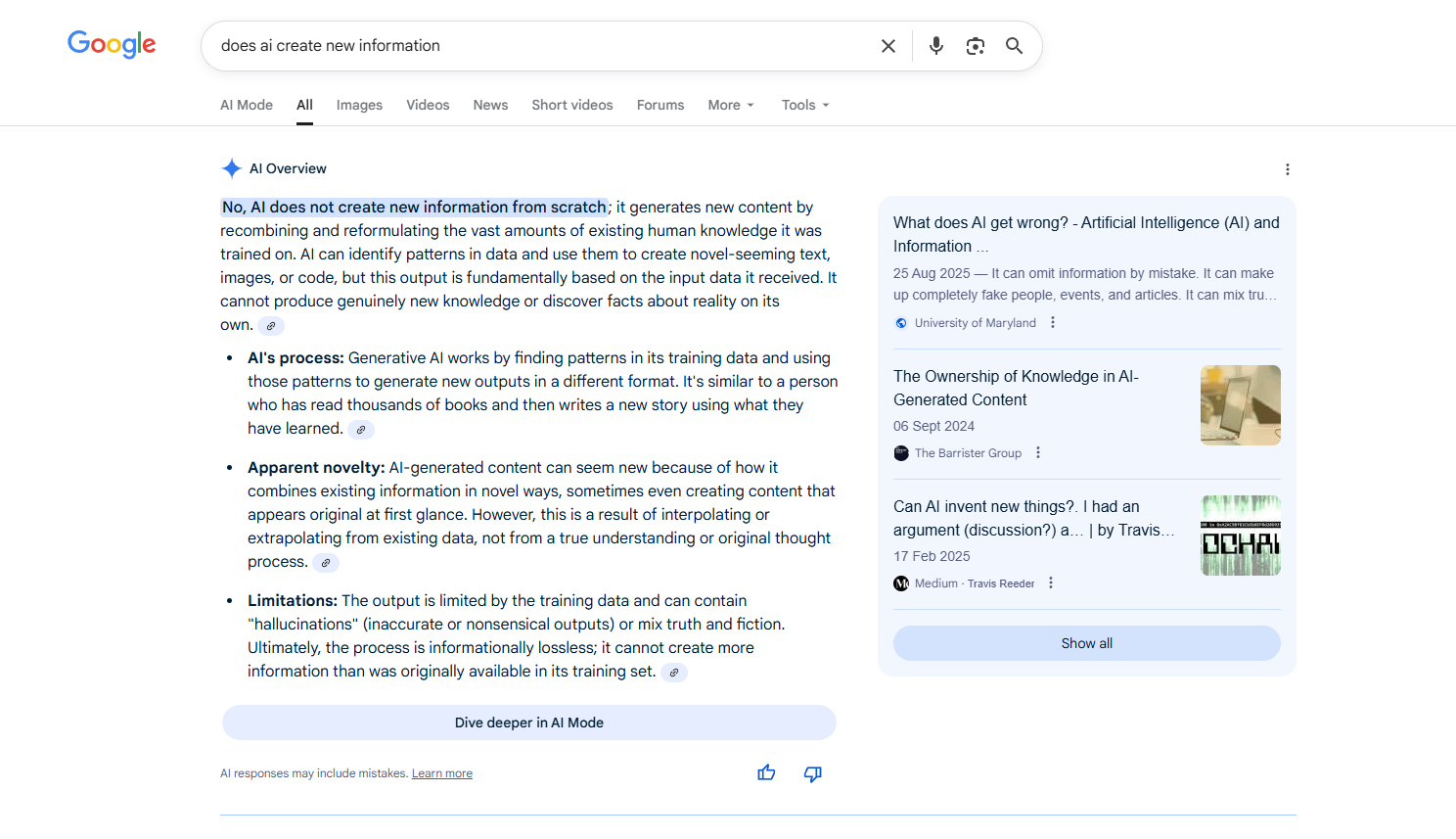
AI Overviews are AI-generated summaries displayed at the top of Google’s search results, designed to provide users with quick and reliable answers without requiring them to click through multiple pages.
Instead of listing only blue links, Google’s generative AI system compiles insights from multiple web pages, then produces a concise written response that appears above organic results and, in many cases, above featured snippets.
These summaries are interactive. Users can expand them to see related follow-up prompts or dive deeper in AI Mode and explore different aspects of a topic.
Each Overview includes source links to the cited websites, giving users a way to verify information or explore original articles.
How Google’s AI Overviews Work
AI Overviews rely on Google’s Gemini model, which operates in concert with core Search systems like ranking algorithms and the Knowledge Graph to interpret and assemble information.
The system does not create new content. Instead, it synthesizes material from trusted sources. It selects the parts of web pages that reliably answer the query and presents them in a concise, human-readable summary.
These AI-generated responses draw on a mix of:
- Indexed web pages (publicly available content)
- Structured data signals such as schema markup
- The Knowledge Graph and related curated datasets
When building an Overview, Google gives more weight to signals of expertise, authority, trustworthiness (E-E-A-T principles), and content quality. The system chooses which external pages to cite, balancing AI-generated clarity with publisher visibility through linked sources that allow users to verify information directly.
However, AI Overviews are not shown for every query. They tend to appear on informational or research-based searches and are less common on ads or transactional searches.
On many desktop interfaces, AI Overviews appear as highlighted summary panels at the top of search results. On mobile, they often adapt to card-style layouts that include images, key points, and cited links.
These Overviews can also change in real time based on follow-up questions, allowing users to refine their search within the results page – especially when combined with Google’s new AI Mode. This new mode lets users dive deeper into the Google AI Overviews.
By merging summarization, source linking, and exploration prompts, AI Overviews effectively combine elements of featured snippets, People Also Ask boxes, and knowledge panels into a single, AI-powered summary system that delivers quick answers and pathways to dig deeper.
Why Google Introduced AI Overviews
Google introduced AI Overviews as part of a broader shift toward AI-assisted search, reflecting how users increasingly expect quick, conversational answers.
The company recognized a growing user preference for contextual, AI-generated answers. A trend accelerated by ChatGPT, Microsoft Copilot, Gemini, and other AI search alternatives.
In response, Google has focused on delivering results that feel interactive and time-efficient.
For users, AI Overviews eliminate the need to perform multiple searches just to piece together key information. Instead, they can get a condensed summary and ask follow-up questions in a conversational format.
This evolution also reflects Google’s focus on responsible sourcing. The company continues to refine its AI systems to minimize misinformation and make it easier for users to verify how AI-generated answers are built.
The addition of source citations, feedback options, and content filtering systems helps maintain trust while experimenting with AI-powered summaries.
Ultimately, AI Overviews aim to simplify complex topics and get users the answers they need as quickly as possible.
How AI Overviews Are Changing the SEO Landscape
The rise of AI Overviews is reshaping how Google evaluates and surfaces information, forcing SEO professionals to adapt their strategies. Here’s how it’s changing traditional search engine optimization (SEO).
A New Challenge and Opportunity for SEO Professionals
For SEO professionals, AI Overviews represent both a challenge and an opportunity.
On one side, AI-generated summaries reduce clicks to traditional websites, raising legitimate concerns about traffic and visibility.
On the other hand, being cited within an AI Overview can significantly increase brand authority, trust, and perceived expertise in your field.

Early Data on Traffic and Click-Through Rates
Early findings from Similarweb and Search Engine Land indicate that click-through rates (CTR) may decline for queries that generate an Overview, since users often find answers directly within the summary box.
However, websites that appear as linked sources within these summaries tend to attract high-intent visitors. These are users who are more likely to engage deeply because they’ve already absorbed key context from the AI summary.
Shifts in Ranking Factors and Visibility
Unlike featured snippets, which usually pull from a single source, AI Overviews reference multiple pages across different domains. This allows Google’s AI systems to present a more diverse set of perspectives while increasing opportunities for smaller or niche sites to appear.
The underlying ranking factors are evolving toward:
- Topical authority over simple keyword targeting
- Clarity and factual accuracy over volume of content
- Structured data and content depth over surface-level optimization
These changes suggest that content quality and organization will carry more weight than raw backlink count or keyword density.
Rethinking Success Metrics in Search
As AI Overviews capture more user attention, traditional KPIs like ranking position and traffic tell only part of the story. Agencies and content marketers need to measure visibility and influence, not just clicks.
Instead of focusing solely on where a page ranks, evaluate how often your brand:
- Appears as a cited source within AI Overviews
- Earns impressions in summary panels or follow-up prompts
- Drives engagement through branded searches after exposure
These signals reveal whether your content is shaping user perception even in zero-click environments.
In this new model, visibility inside AI-generated summaries builds authority that compounds over time – an advantage traditional analytics tools may not yet capture but one that’s critical for maintaining search relevance in the years ahead.

How to Optimize Content for AI Overviews
From what we’ve observed across hundreds of client projects, the sites that tend to appear in AI Overviews share clear patterns. They publish original insights, structure information logically, answer user queries clearly, and explain complex topics in a way that’s easy for both users and search systems to understand.
Here’s how to position your content effectively.
Write Concise, Factual Summaries
AI models favor content that communicates complex questions clearly. Start sections with a one- or two-sentence summary that directly answers the topic. Then you can provide supporting details or examples. This makes it easier for AI systems to extract relevant information for generated summaries.
Use Schema Markup and Structured Data
Adding schema markup helps Google’s AI systems recognize your content type and context. Use appropriate schema for FAQs, articles, and how-tos to improve indexing and strengthen visibility in search results. This step signals your content as reliable, organized, and easy to parse.
Include Clear Headings and Question-Based Subtopics
Google often uses question-based headings to structure its AI-generated answers.
Use your H2s and H3s to mirror how users naturally phrase searches, such as “How do AI Overviews work?” or “Are AI Overviews replacing featured snippets?” This approach increases your chances of appearing in related follow-ups and AI summaries.
Demonstrate E-E-A-T
Google’s AI Overviews prioritize expertise, experience, authority, and trustworthiness. Build these signals by citing credible sources, publishing bylined experts, and maintaining consistent author bios.
Linking to recognized data sources, such as Statista, Ahrefs, etc, helps validate your content and strengthen trust.
Keep Content Fresh and Verifiable
Because AI Overviews are powered by Google’s main Search index, which continually refreshes with newly crawled pages, content recency still plays an important role in visibility. Older or outdated content may not qualify for citation.
Update your pages frequently with new insights and statistics. Include publication or revision dates, and make it clear that your content reflects current best practices in SEO and content marketing.
Encourage Brand Visibility Through Citation
When AI Overviews pull text from your page, they include a source link beneath the summary. This link can drive highly targeted visits from users already primed to take action.
To improve your likelihood of being cited, make sure your content:
- aligns with search intent
- uses natural language
- offers unique perspectives that differentiate it from generic web pages

Frequently Asked Questions About AI Overviews
What’s the Difference Between AI Overviews and Featured Snippets?
Featured snippets highlight a single website’s answer, while AI Overviews synthesize insights from multiple sources using generative AI.
Featured snippets extract text verbatim, but AI Overviews create AI-generated summaries supported by cited links to relevant pages. This makes Overviews broader, more contextual, and less dependent on one source.
How Can My Site Appear in AI Overviews?
To be cited in AI Overviews, your site must publish high-quality, factual, and helpful content that demonstrates E-E-A-T.
Structure your pages clearly, include relevant schema, and ensure your answers are direct and well-organized. Maintain a consistent publishing cadence and update your posts with the latest data and examples.
Are AI Overviews Replacing Organic Search Results?
Not entirely. AI Overviews occupy a prominent position in Google Search results, but organic listings remain essential.
The difference is that visibility now includes being part of AI-generated summaries. Success in the new landscape means balancing traditional SEO with strategies that make your brand visible in AI-driven search features.
In Conclusion: The Future of Search Visibility Will Continue Changing
AI Overviews represent a defining shift in how Google Search presents information. They reduce the friction of discovery, allowing users to find helpful, summarized answers in one go.
For agencies and marketers, this change demands a shift from chasing keywords to building authority and clarity in every piece of content.
Rather than viewing AI-generated answers as a threat, we see them as a signal to create stronger and more trustworthy content. Brands that adapt early will benefit from greater exposure and long-term trust.
We believe the future of SEO lies in collaboration with AI, not competition against it.
At Contentellect, our focus remains on helping businesses scale content efficiently.
For more guidance on crafting high-impact, scalable content that aligns with evolving search systems, get in touch with us about our content marketing services and white label content services.
