

Internet search is changing fast, and one of the biggest shifts is happening inside Google itself. Let’s talk about Search Generative Experience (SGE) – a new way of delivering results that combines traditional search with AI-powered snapshots, follow-ups, and contextual answers.
For agencies and marketing professionals, understanding how Google’s SGE works is critical for adapting SEO and content strategies that keep driving return for your business.
So, let’s run through what SGE means (as more than a definition), how it works, where it’s available, and how it impacts the future of content marketing.
What Is Google SGE?
Google SGE is an AI-enhanced search experience that uses generative AI to provide summarized, conversational answers directly within search results. An AI Overview.
So instead of scrolling through a couple of different links and piecing together information yourself, you’ll often see an AI-generated snapshot at the top of the page that answers your search query.
This shift matters because it fundamentally changes how people discover information online.
For businesses and agencies that rely on organic traffic, SGE represents both opportunity and disruption.
On one hand, users get faster and more contextual answers. On the other hand, fewer click through to websites if their question is already answered in the snapshot. And we’re sure you’ve noticed the effects of that in your organic traffic numbers.
Understanding SGE is vital because:
- It’s Google’s response to the growing adoption of AI assistants like ChatGPT.
- It reshapes the customer journey from research to purchase.
- It introduces new search engine optimization (SEO) signals and ranking dynamics that go beyond traditional search.
Simply put, SGE is a new level of search that every digital business owner needs to grasp to stay ahead of the competition.
How Google’s SGE Works Behind the Scenes
Google’s SGE is powered by large language models (LLMs), the same class of AI behind tools like Gemini. These models are trained on massive datasets and optimized to generate fluent, human-like responses.
But unlike standalone AI chatbots, SGE is tightly integrated with Google’s existing search infrastructure.
Here’s what happens when you run a query:
- Query understanding: Google interprets your search intent using natural language processing.
- AI generation: The model generates a draft snapshot that pulls together relevant insights.
- Fact-checking: Google cross-references the snapshot against its search index and quality signals.
- Display: You see an AI summary with links to supporting sources, alongside the standard results.
Google has been careful to position SGE as an experiment in Search Labs rather than a final product. This staged rollout allows the company to collect feedback, refine the models, and avoid high-profile mistakes.
Still, for marketers, it’s already clear that SGE is becoming a default mode of search for many types of queries.
What the SGE Experience Looks Like in Search
So what does SGE actually look like when you’re searching? It’s more dynamic than traditional search results, and it introduces new ways for users to interact with information.
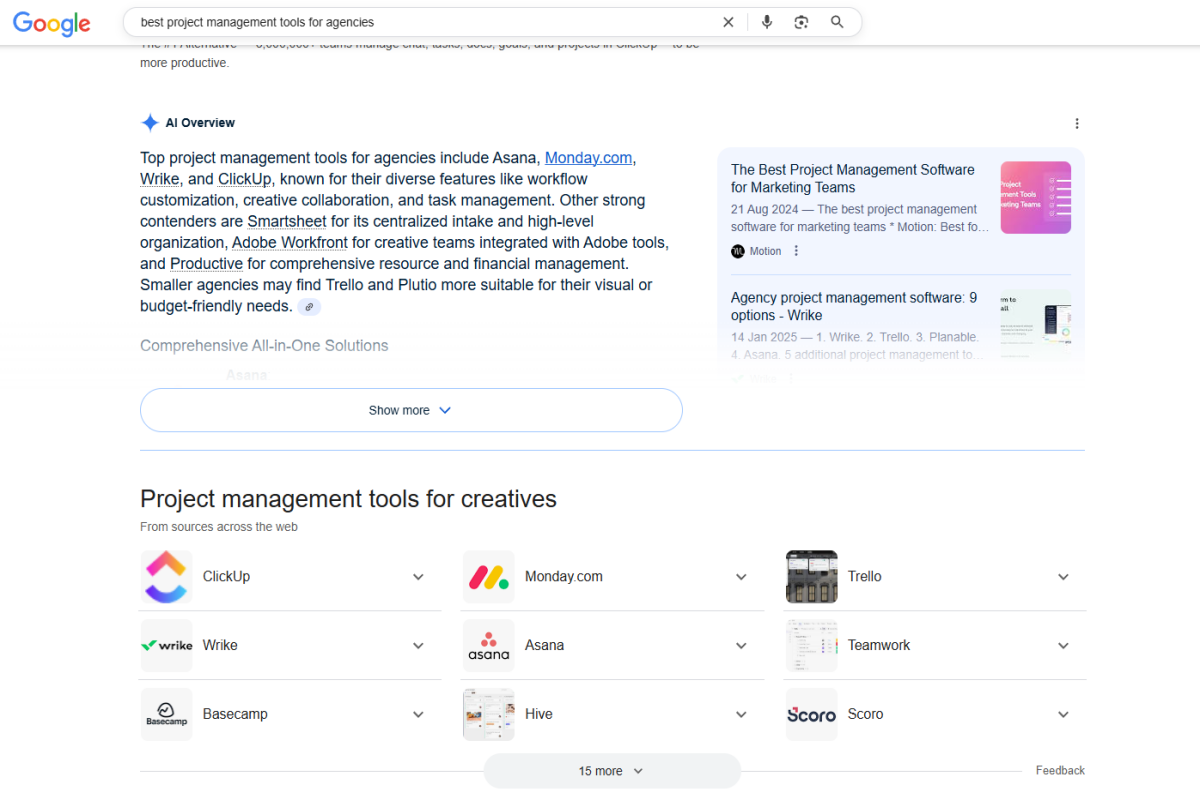
The most visible part of SGE is the AI snapshot, which appears at the very top of the search results page.
This box includes:
- A concise, conversational summary of the answer.
- Inline citations linking to sources.
- Suggested next steps or related queries.
For example, if you search “best project management tools for agencies,” SGE generates a paragraph comparing options like ClickUp and Monday.com, complete with links to relevant reviews.
This is meant to save you some time, but it also shifts visibility away from individual websites and toward the AI-generated overview.
Using Follow-Up Questions to Refine a Query
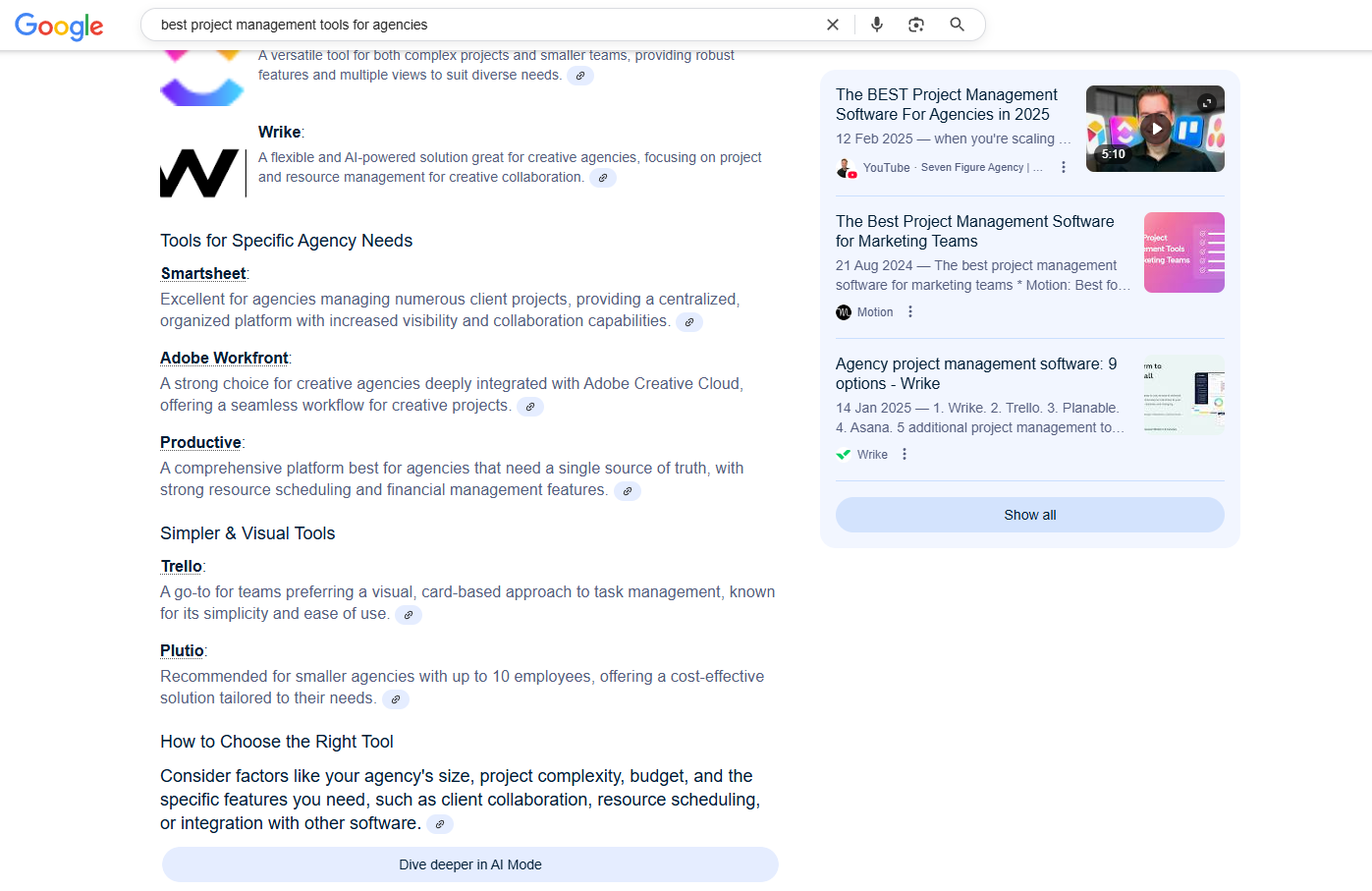
Another unique feature of SGE is the ability to ask follow-up questions directly inside the search interface. Instead of typing a new query from scratch, you can click one of Google’s suggested refinements or “Dive Deeper in AI Mode,” as shown below.
This turns Google into more of a conversation partner than a static search engine. It encourages deeper exploration of a topic while keeping the user within Google’s ecosystem.
For businesses, this means long-tail queries may get bundled into ongoing search conversations, making it essential to optimize content marketing for context, not just keywords.
When Does Google Show SGE?
SGE doesn’t appear for every search. A recent analysis of 2.37 million U.S. queries found that AI Overviews appear in about 25.8% of searches. But that rate is much higher for longer, informational queries.
Common triggers include:
- Broad informational searches (e.g., “what is content velocity”)
- Comparisons (e.g., “WordPress vs. Webflow for e-commerce”)
- How-to queries (e.g., “how to build backlinks ethically”)
SGE is less common for highly sensitive topics like medical or financial advice, where misinformation could be harmful.
It’s also less likely for hyper-specific navigational queries and local Google searches, such as “Ahrefs pricing page” or “restaurant near me.”
7 Benefits of Using SGE for Search and Digital Marketing
Google’s Search Generative Experience (SGE) is designed to make search faster and more interactive for users. For agencies and businesses, it changes how audiences discover content and products, while shifting the signals that matter for SEO efforts.
Here’s where SGE brings clear value and what it means for your digital marketing strategy.
1. Get Faster Answers to Broad Questions
Instead of scrolling through pages of organic search results, SGE snapshots give a quick, conversational summary in seconds. That’s a win for busy professionals who want key information upfront.
But because snapshots work best for general queries, businesses publishing in-depth content still have room to capture more specific searches.
2. See Summaries From Multiple Sources at Once
SGE blends insights from several authoritative sites and shows citations in an answer box. This makes it easier for users to form a balanced perspective without leaving the search page.
For brands, it raises the bar: structured data, clear formatting, and trustworthy information increase the chance of being cited as an SGE source.
3. Get Step-By-Step Guidance for How-to Queries
Ask a “how to” query, and SGE often generates ordered steps with supporting links. For example, “how to set up GA4 tracking” may return a full process plus source panel references.
Businesses that publish practical, instructional content with bullet points, images, or videos are more likely to see inclusion in these results.
4. Compare Complex Topics With More Context
When users search for something like “WordPress vs Webflow for e-commerce,” SGE generates side-by-side comparisons highlighting standard features, pros, and cons.
Accuracy and clarity matter more than ever. Comparison content should be updated regularly and optimized so Google can parse and present information cleanly.
5. Explore Products With Visual and Shopping Data
Product-focused search queries now surface value cards, larger images, ratings, and product viewers right inside SGE results. That makes it easy for shoppers to compare specific products at a glance.
eCommerce brands need optimized product descriptions, structured data, and visuals to influence what appears. Google Business Profiles and the places module also ensure physical stores show up in SGE local results.
6. Refine Searches Easily With Follow-Up Prompts
SGE turns search into more of a conversation. Users can click suggested refinements, add follow-up questions, or dive deeper without starting a new query.
For businesses, that means visibility isn’t tied to a single keyword anymore. Content that covers related questions in context has a better chance of staying visible as the user’s query evolves.
 Top view of women use computer laptop to find what they are interested in. Searching information data on internet networking concept
7. Strengthen Authority and Brand Visibility
Even if a user doesn’t click through, being cited in an SGE snapshot builds authority. Content that demonstrates Experience, Expertise, Authoritativeness, and Trustworthiness (E-E-A-T) is more likely to surface in this evolving landscape.
For agencies and digital marketing teams, aligning content with these standards is critical to maintain visibility and brand trust as Google search moves deeper into the generative experience.
The Limitations and Drawbacks of SGE
SGE makes the search faster, but it isn’t flawless. For businesses that depend on organic search results, these limitations play a critical role in how to adapt strategies.
1. Inaccurate or Misleading Answers
Generative AI is powerful, but it can still hallucinate, presenting incorrect or outdated information as fact.
Even though Google cross-checks with its search index, certain queries (especially niche or fast-changing ones) can slip through with errors. That’s why you should always verify key information before relying on SGE results.
2. Limited Availability by Query and Location
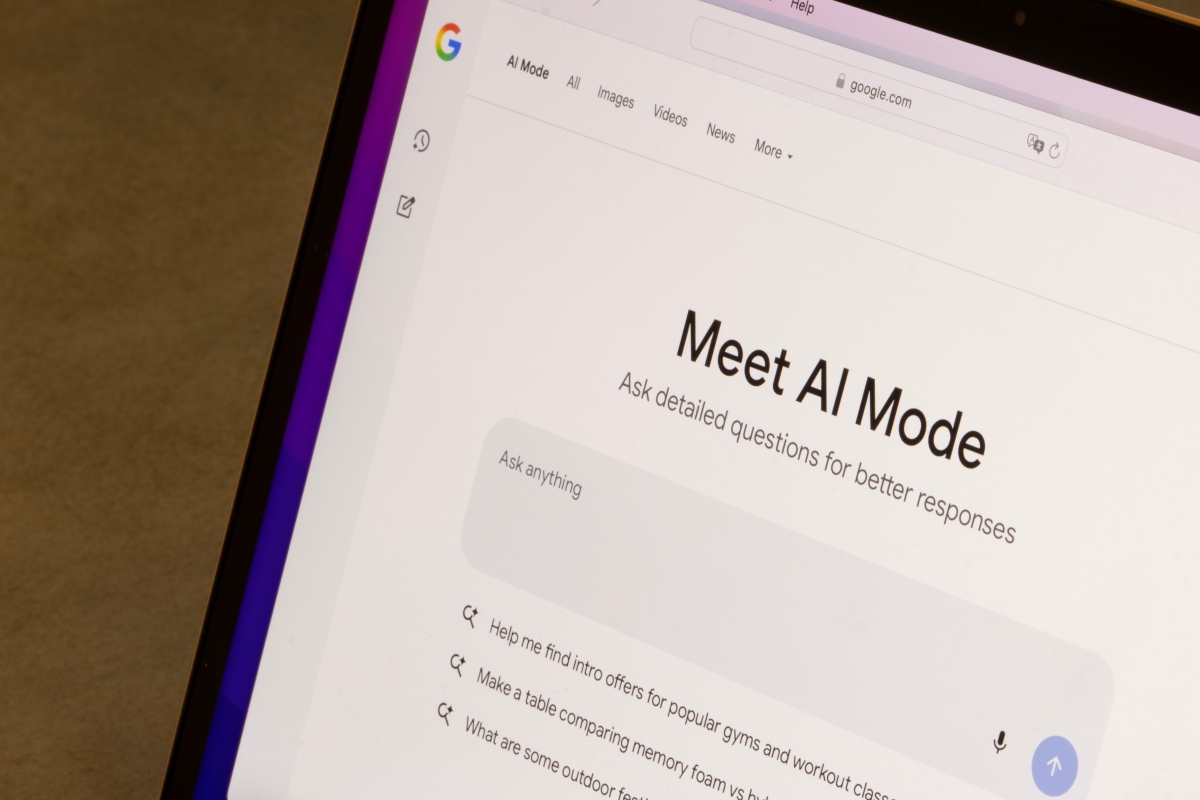
SGE isn’t guaranteed. Some searches trigger snapshots, others don’t. It depends on the type of query, geography, and language. While SGE began as an opt-in experiment in Google’s Search Labs, many features are now rolling out more broadly by default. This uneven rollout means exposure is still inconsistent across audiences.
3. Slower Load Times
Unlike standard features in traditional Google Search, SGE snapshots can take several seconds to appear. For users expecting instant answers, that delay is enough to skip the generative experience entirely and scroll straight to organic search results.
4. Lack of Transparency in Sources
Google hasn’t explained why certain SGE sources are cited in the answer box while others are left out. For SEO professionals, that lack of clarity makes it hard to optimize content with the same precision used for traditional ranking factors.

5. Fewer Clicks, More Zero-Click Searches
Because SGE presents information directly on the page, many users don’t feel the need to click through. This growing number of zero-click searches means impressions may rise, but traffic declines.
This is especially concerning for local businesses, since 46% of Google searches have local intent. If AI Overviews dominate these queries, many businesses could lose visibility before a user ever reaches their website.
And with AI Overviews already appearing in roughly a quarter of all U.S. searches – and even more in certain verticals – the trend toward zero-click behavior is only accelerating.
Agencies and site owners will need to rethink ROI models and find new ways to engage audiences who get answers before they ever visit a page.
How SGE Changes SEO and Content Strategy
SGE reshapes how SEO and digital marketing work. To stay visible, you need to adjust both your tactics and mindset to optimize for AI search.
Ranking in SGE Means New Signals
In traditional Google Search, the goal is to crack the top 10 organic search results. In SGE, the goal shifts to inclusion in AI snapshots. That requires stronger authority signals, structured data, and content that’s built to match a user’s query directly.
Create Conversational, Intent-Driven Content
Because SGE mimics natural conversation, it favors content that does the same. Articles that clearly answer “what is” or “how to” questions, in plain language, are more likely to be included in SGE results.
Focus on creating content that feels like a natural conversation with your audience, not just a page packed with keywords.
Use Structured Data and Clean Formatting
Schema markup, clear headings, and bullet points make it easier for Google’s AI to parse and present information. FAQ schema and well-formatted lists increase the chance of being cited in the answer box or source panel.
Demonstrate Real Expertise and Authority
Google rewards content that reflects E-E-A-T: Experience, Expertise, Authoritativeness, and Trustworthiness. That means including expert quotes, transparent bylines, link building, and credible sources. This isn’t optional anymore. It’s critical for inclusion in generative results.
Keep Content Fresh
Outdated pages lose ground in an AI-driven search experience. SGE favors relevant, recent content. Update your evergreen content regularly, publish new content consistently, and make sure your pages present information that’s timely and accurate.
Add Rich Media for Better Visibility
SGE also surfaces images, videos, and other media in its generative experience. Optimized product descriptions, visuals with alt text, and media-rich pages increase the odds of showing up in snapshots and value cards.

What to Expect Next for Google SGE
Google has framed SGE as an experiment in Search Labs, but all signs point to broader adoption.
Here’s what’s likely ahead:
- Expanded rollout: Google has already expanded generative search to 120+ countries and territories, adding languages like Spanish, Portuguese, Korean, and Indonesian. With AI Overviews now available in 100+ countries, SGE is clearly moving beyond its opt-in state and edging closer to a global default.
- Improved speed: Google is investing heavily in AI infrastructure. These efforts are expected to reduce latency and improve the responsiveness of SGE snapshots, even if exact benchmarks are not yet publicly available.
- Refined accuracy: Google is refining outputs by learning from users’ queries and feedback. Recent updates, like better follow-up questions, translation support, and more reliable definitions, show how accuracy is being tuned over time.
- Monetization: Industry analysts widely expect ad opportunities to appear inside or alongside SGE results, particularly around product descriptions, shopping queries, and local results. SGE is already shifting how ads and organic content share search real estate, even if Google hasn’t fully detailed the formats yet.
For agencies and businesses, the critical role here is agility. SEO efforts that work today may evolve quickly, so ongoing testing, measurement, and adaptation are essential to stay visible in this evolving landscape.
Final Thoughts
Google’s SGE is transforming search, changing how people discover information, evaluate options, and make decisions. For users, it means faster answers. For agencies and content teams, it means a complete shift in how visibility is won and maintained.
If you’re unsure how to adapt (what to prioritize, what to change, or where to start), you don’t have to figure it out alone.
At Contentellect, we specialize in creating SEO-ready content designed for evolving search results. Let us help you stay visible in Google’s generative search era.
Explore our content writing services or white label content and see how we can turn uncertainty into growth with clear, results-driven solutions.
